

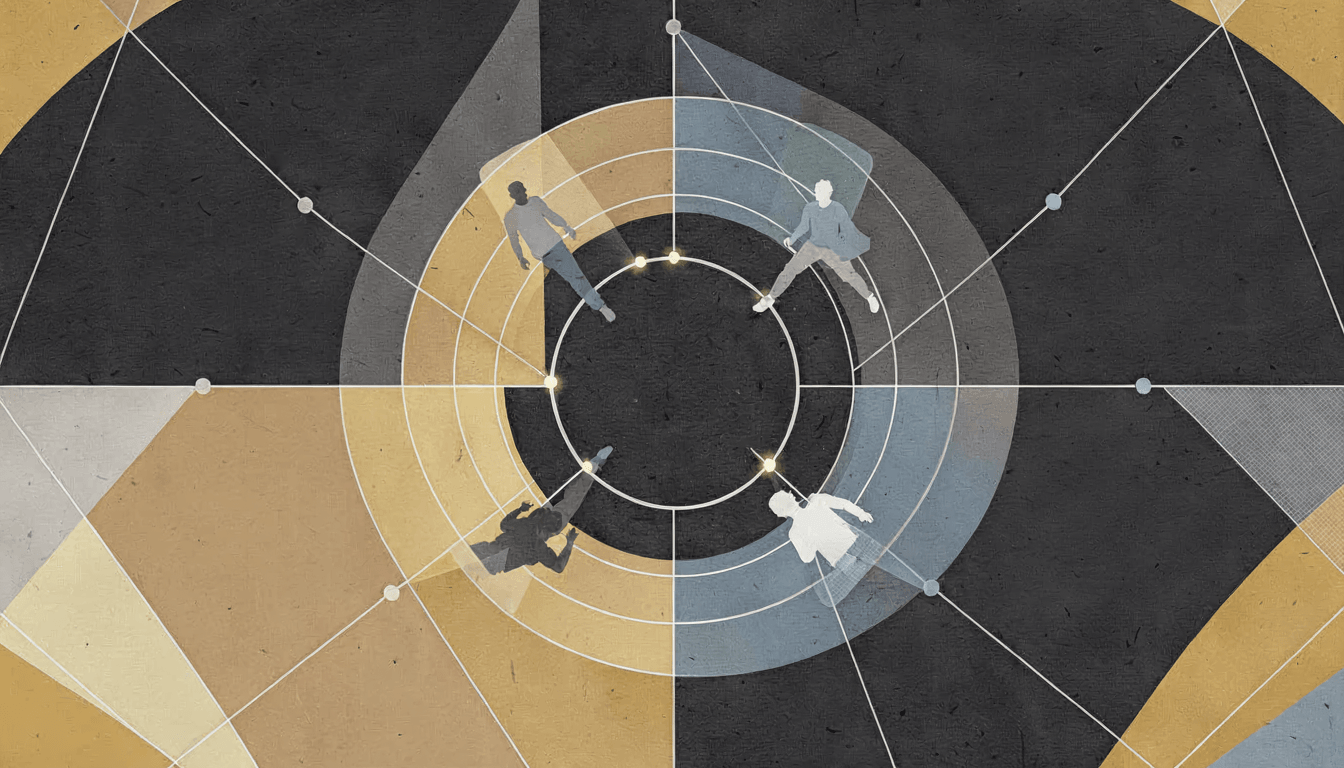
The most important question in AI work is shifting.
It is no longer only, "How much faster can one person move with AI?"
It is, "Can a group move with more shared context, better judgment, and less rework?"
That is the real meaning of the Era of We.
Not machine intelligence replacing human intelligence. Not vague collective wisdom. Shared work that gets smarter because people and AI agents are oriented around the same context.
Individual AI is useful but incomplete
Private AI tools make individuals faster.
They help draft, summarize, analyze, brainstorm, and prepare. That value is real.
But teams do not operate as a collection of isolated prompt windows. They operate through shared decisions, handoffs, trust, context, and follow-through.
If AI helps each person privately but does not improve the shared work, the team can still drift.
The Era of We starts when AI participation becomes visible to the group.
Intelligence lives in the handoff
Most work breaks at the handoff.
The meeting happened, but the decision was not captured. The customer call revealed something important, but it never reached product. The founder narrative changed, but the deck still says the old thing. The AI output was useful, but only one person saw how it was made.
Shared intelligence should make those handoffs better.
It should preserve the reasoning, turn conversations into artifacts, and keep next steps tied to visible ownership.
What shared work needs
A practical shared-intelligence system needs:
- room-level context,
- participant agents with visible roles,
- durable artifacts,
- correction paths,
- approval-visible action,
- privacy boundaries between personal and shared memory.
These are the mechanics that make "we" real.
Without them, the phrase becomes branding.
The human role remains central
The goal is not to blur people and AI together.
It is to make each contribution clearer.
Humans bring judgment, taste, responsibility, relationships, and values. AI can help preserve context, generate options, summarize complexity, and prepare artifacts. The system should make those roles visible rather than hiding them inside a single stream of output.
That is how collaboration earns trust.
The product lens
A product should prove the Era of We through one bounded experience:
people and AI agents working in the same room, using the same context, creating one durable output, and moving to one bounded follow-through step.
That is concrete enough for a user to feel.
It is also strong enough to support the broader platform horizon.
The Era of We is not a slogan about the future of intelligence.
It is a product discipline: make shared work easier to understand, improve, and carry forward.